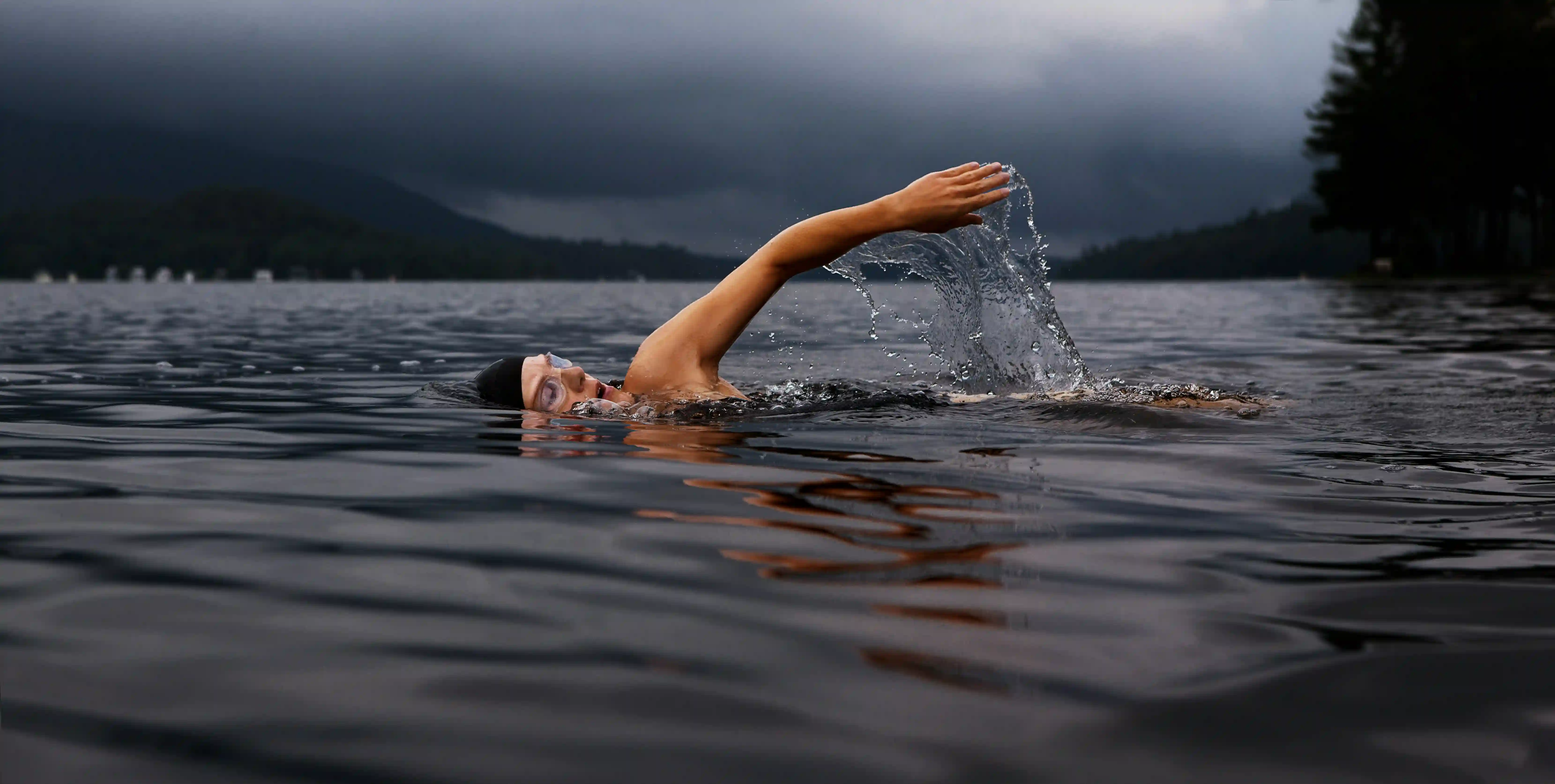
If you swim well in a pool, open water can still surprise you. The skills carry over, but the conditions, the navigation and the nerves are different. This is a practical starting point.
What Is Different From the Pool
There is no wall to rest on, no black line to follow, and no lifeguard at the end of your lane. Water temperature, waves, visibility and other water users all change how a swim feels. A good pool swimmer can still find the first open-water swim hard, mostly because of sighting and nerves, not fitness.
Safety Basics
- Never swim alone. Go with a partner, a group, or at a supervised swim spot.
- Use a tow float. A bright inflatable float makes you visible to boats and gives you something to hold if you need a rest.
- Wear a bright cap. Neon colors are far easier to spot than dark ones.
- Check conditions first: wind, current, water quality notices and temperature.
- Enter gradually. Cold water can trigger a gasp reflex and fast breathing, so give yourself a minute to adjust before swimming off.
Learning to Sight
Sighting means lifting your eyes briefly to check your direction. Pick a landmark on the far shore, look forward at the top of a stroke, then return to normal breathing. Practice it in the pool first, a few times per length, so it becomes automatic before you need it outdoors.
Gear Worth Having
A wetsuit adds buoyancy and warmth in cooler water, and open-water goggles with larger lenses make sighting easier. Check our goggle guide for lens and fit tips. A swim watch can help track distance outdoors, and our tracker roundup covers those that work well in open water.
What About Music?
This is worth being careful about. Hearing boats, other swimmers and a safety kayaker matters more outdoors than in a pool, and many open-water events and triathlons ban headphones during the race. A lot of swimmers keep audio for pool sessions and train without it in open water. If you want one headset that works across swim, bike and run training, devices like the SONR Multisport are designed for that, but check the rules of your event first.
Your First Swim
Keep it short and easy: 10 to 15 minutes close to shore, with a partner. Swim parallel to the shoreline rather than straight out, so you are never far from a place to stop. Build the distance over a few outings, not in one go.