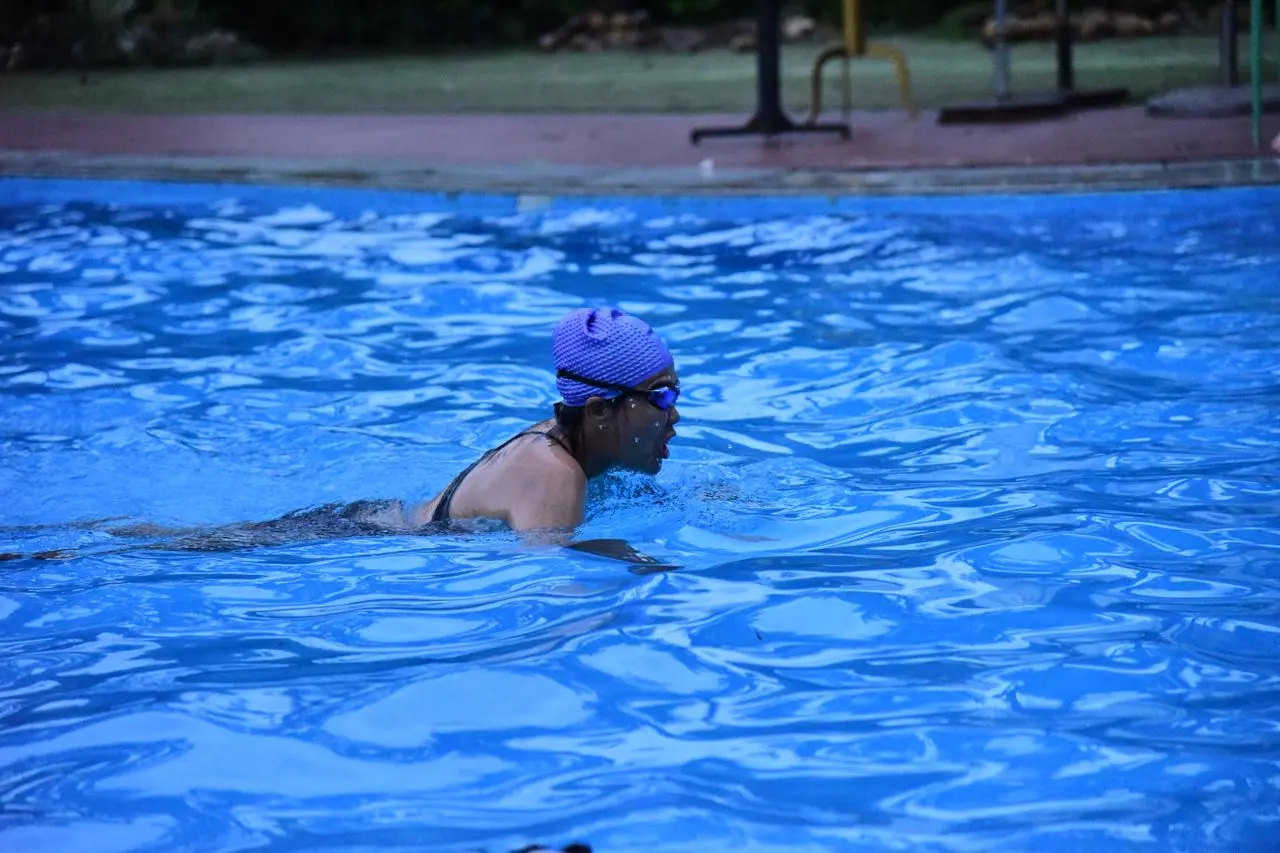
Lap swimming has one real problem: it's repetitive. Black line, wall, turn, repeat. Plenty of people who like swimming quit the habit not because of fitness or time, but because the sessions got dull. These are the things that actually help.
1. Swim a Structured Set Instead of "Just Laps"
"Swim 2,000 meters" is a long, shapeless task. "Warm-up, 4 x 200, then 8 x 50 fast" is a series of short ones. Breaking a session into blocks gives you something to finish every few minutes, which is a very different mental experience from one continuous slog.
2. Rotate Strokes and Drills
Mixing in backstroke, breaststroke, kick sets, or technique drills changes both the effort and the scenery. Even one drill block per session makes the time pass differently and usually improves your freestyle too.
3. Give Your Brain Something to Do
Counting strokes per length, trying to hold an even split, or playing with breathing patterns all turn passive laps into an active puzzle. Stroke counting in particular is a good one: it's boring to describe and surprisingly absorbing in the water.
4. Pick One Small Goal Per Session
"Today I'm working on a longer glide off each wall" is enough. A single focus point makes the session feel purposeful and gives you something concrete to notice.
5. Add Audio You Can Actually Hear
Music or a podcast changes how long a session feels, and it's the most common reason swimmers cite for sticking with the habit. The catch is that regular Bluetooth earbuds don't work underwater, so you need a device that plays files stored on the device itself. Bone-conduction swim players such as the SONR Music are one way to do that; whichever you choose, load the files in advance, since there's nothing to stream mid-lap.
6. Use a Little Equipment
A pull buoy, paddles, fins, or a snorkel each change the feel of the stroke and let you work different things. A session with two or three different pieces of equipment feels like a different workout from one done with no gear at all.
7. Swim With Other People
A masters group, a lane partner, or even just a friend in the next lane turns the session into something social. If a group isn't possible, scheduling sessions at the same time as a regular lap-swim crowd can help too.
8. Track Something
Whether it's a watch, a notebook, or a whiteboard at the pool, having a record of what you did makes progress visible, and visible progress is one of the best antidotes to boredom. If you're comparing trackers, our fitness tracker roundup covers the main options.
9. Change the Environment Sometimes
An outdoor pool, a different time of day, or a rare open-water swim resets the routine. Even switching lanes or pools occasionally helps break the monotony of always seeing the same tiles.